5G is the fifth generation of cellular technology: your phone exchanges radio signals with a nearby antenna, and that antenna connects to a carrier’s wired network and, through it, the internet. What makes 5G different from 4G is how much radio spectrum it can use, how precisely it aims signals, and how many antennas a carrier can place close together.
The practical result is that “5G” describes a family of different experiences, not one speed. What you get depends on the radio band your carrier is using, how far you are from the antenna, how many people share it, and what your phone supports.
What does 5G actually mean?
The “G” stands for generation. Each generation is a set of technical standards that phone makers, carriers and equipment builders agree on so devices and networks work together. The U.S. Government Accountability Office (GAO), Congress’s watchdog agency, described 5G in a technology assessment released November 24, 2020. It said fifth-generation networks promise “significantly greater speeds and higher capacity to accommodate more devices,” and are expected to be more flexible, reliable and secure than earlier cellular networks.
Those are promises about what the technology is designed to do, not guarantees of what any one user will see. The same GAO assessment noted that initial U.S. deployments, which began in late 2018, focused on enhancing mobile broadband, relied on the existing 4G core network, and in many areas produced only modest performance gains. The agency said full 5G performance was expected to arrive gradually over the following decade as new technologies and international specifications were developed and deployed.
How does a 5G connection work, step by step?
A 5G call, video or web request follows a path that is mostly the same as in earlier generations:
- Your phone converts data into radio waves using a modem chip and a tiny antenna.
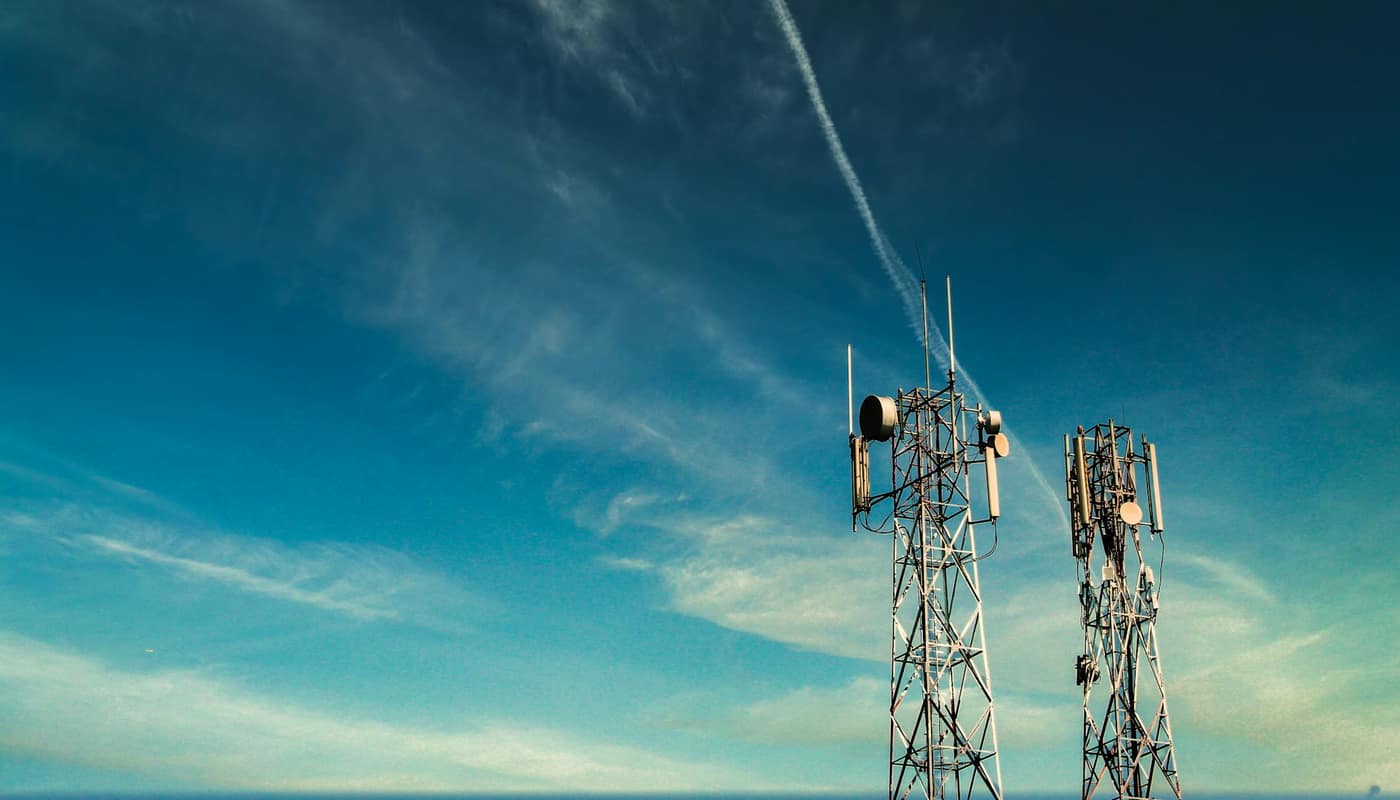
- A nearby cell site receives the signal. This can be a large tower or a small antenna on a pole.
- The radio network passes the data from the cell site into the carrier’s core network, usually over fiber-optic cable or a high-capacity wireless link. That link from the antenna back to the network is called backhaul.
- The core network routes the traffic to the wider internet or to another phone, and sends responses back along the same path.
The GAO’s observation that early 5G depended on the 4G core network is a good illustration. The radio part, between phone and antenna, can be upgraded separately from the core, which is why carriers could switch on 5G radios before the whole system was redesigned. Whether a given carrier’s network has since moved to a newer core is something the carrier, not this article, can tell you.
Why do different radio bands change what you experience?
Radio waves are classified by frequency, measured in hertz. Cellular carriers license slices of frequency, called spectrum, from the federal government. Engineers generally group spectrum used for 5G into three tiers, and the trade-off between them is the central idea for understanding 5G.
| Band tier | Typical strength | Typical weakness |
|---|---|---|
| Low-band | Travels far and passes through walls well, so it covers wide areas | Carries less data, so speeds are closer to good 4G |
| Mid-band | A balance of coverage and capacity | Covers less area than low-band and handles walls less well |
| High-band (millimeter wave) | Very large capacity and the fastest speeds | Short range and easily blocked by walls, trees and even a hand over the phone |
The physics is simple: higher-frequency waves can carry more information but weaken faster over distance and are more easily absorbed or blocked. The GAO assessment flagged the same tension when it said 5G needs more spectrum, which it called a “scarce resource,” and when it listed high-band technology among the topics it examined. Carriers typically combine tiers, using low-band for broad coverage and adding mid-band or high-band where they want more capacity.
What are small cells, and why is 5G putting antennas on poles?
Because high-capacity signals do not travel far, a network that relies on them needs more antenna sites, spaced closer together. Many of these are “small cells”: compact antennas and radio equipment that can be mounted on existing infrastructure such as streetlights and utility poles. Large towers, which the City of San Diego calls conventional or “macro” facilities, still cover wide areas. Small cells add capacity in dense places.
How San Diego handles them
The City of San Diego regulates this equipment through its Development Services Department. According to the city, the department’s Telecom and Utilities Division reviews applications for conventional wireless communication facilities as well as requests to use city streetlights and traffic signal poles for small cells. The city says its rules rest on the Land Development Code (section 141.0420), Council Policy 600-43 and design guidelines built on the principles of “balance, context and least visibility.”
The city’s information bulletin on small cells on streetlights, dated May 2026, lays out a process with several parts:
- A carrier needs a Master Use and Occupancy Agreement, which the city describes as a license to attach small cell equipment to city-owned streetlights in the public right of way.
- Each individual node, meaning each installation location, needs its own right-of-way permit.
- Designs must match the look and height of existing streetlights in the area. Non-standard designs require a Neighborhood Use Permit, and ground-mounted equipment other than a pole requires a Conditional Use Permit.
- The city limits applications to 20 per week per carrier. According to the bulletin, a permit not made active within its first 90 days is void.
The bulletin also lists a $5,000 transaction fee for new, renewed or amended agreements, and notes that the amount is subject to change. Anyone who needs a current requirement or fee should confirm it with the city.
Is 5G safe? What the health agencies say
Radio frequency (RF) energy is the type of energy cell phones and cell sites use, and public concern about 5G often centers on it. The U.S. Food and Drug Administration’s page on cell phone safety, which was last marked current as of May 13, 2021 and does not specifically discuss 5G, states that “the weight of scientific evidence has not linked cell phone radio frequency radiation with any health problems.” The agency also says it continually monitors the scientific studies and public health data on cell phones.
The GAO assessment, for its part, listed concerns about possible health effects of high-band 5G technology as one of the challenges it identified, alongside spectrum sharing, cybersecurity and privacy. The two statements are not the same thing: one is a regulator’s reading of the evidence on cell phones, and the other is a watchdog’s note that the question was among those the public and policymakers were raising. Neither page gives an individual health recommendation. Readers with specific health questions should talk to a clinician.
On the local side, the City of San Diego says it cannot evaluate wireless facility applications on health-related concerns when RF emissions are within federal limits, and that carriers must submit a report showing compliance with Federal Communications Commission (FCC) limits.
What do people commonly get wrong about 5G?
“5G” on a home router is not cellular 5G. Wi-Fi routers sometimes advertise a “5G” or “5 GHz” band. That refers to a Wi-Fi radio frequency, not to the fifth generation of cellular service. Wi-Fi is a local connection in your home or business; cellular is a carrier’s wide-area network.
5G is not automatically ten times faster. Speeds depend on band, distance, congestion and device. The GAO’s finding that early deployments produced modest gains in many areas is a reminder that the headline figures in advertising describe best cases.
5G is not only millimeter wave. Much everyday 5G uses low-band and mid-band spectrum, which behave more like earlier cellular service in terms of reach.
A 5G icon does not guarantee strong service indoors. Higher bands are more easily blocked by building materials, so a phone can show a 5G symbol and still perform poorly in a basement or interior room.
5G does not make a phone immune to scams. A faster network does not change how fraud works. Text-message scams arrive over any generation of network; see how to spot phishing texts and smishing.
Why does 5G speed vary from block to block?
Several factors combine, which is why two people on the same carrier can report very different results:
- Band in use. Low-band, mid-band and high-band connections behave differently, as described above.
- Distance and obstacles. Signal weakens with distance and is blocked by walls, hills, foliage and terrain.
- Congestion. Many users on one cell site share its capacity, so a stadium, beach or freeway at rush hour can slow down a strong signal.
- Your phone. Older phones may not support newer bands, and a phone can only use what it was built to receive.
- Your plan. Carriers may manage speeds differently across plans. Check your carrier’s terms.
- Backhaul. Even a strong radio link depends on the connection behind the antenna.
Because of this, no map or advertisement can promise the speed you will get at a specific table or desk. For fixed internet at a home address, coverage data is a different question. The FCC’s national map and the state’s map are covered in guides on using the National Broadband Map and on finding home internet in San Diego.
How can you tell what 5G service you will actually get?
A few steps give a more reliable picture than a logo on the phone screen:
- Ask your carrier which 5G bands cover your home, office and commute, and whether the plan limits speeds.
- Confirm your phone supports those bands.
- Test the connection yourself in the places you use it most, at different times of day.
- If service is poor indoors, ask about Wi-Fi calling or a wired home connection as an alternative.
- Treat coverage maps from carriers as marketing material that describes the carrier’s own claims, and compare them against your own experience.
The short version on 5G in San Diego
5G is a set of standards that lets phones and networks use more spectrum, in more places, with more antennas. It works through the same basic chain as earlier cellular generations, from phone to antenna to core network to internet. The experience varies mainly because of the band, the distance and the crowd. In San Diego, the visible part of the build-out is often a small antenna on a streetlight, which the city reviews through a permit process with design, agreement and timing requirements that it publishes. The GAO’s 2020 point that full 5G performance would arrive gradually remains a useful way to read any claim: check what the network is doing where you live and work.
This article is general information, not personalized legal, financial or health advice. Service, permitting rules and fees change, so check with your carrier and the City of San Diego for current details.
Sources: U.S. Government Accountability Office; U.S. Food and Drug Administration; City of San Diego