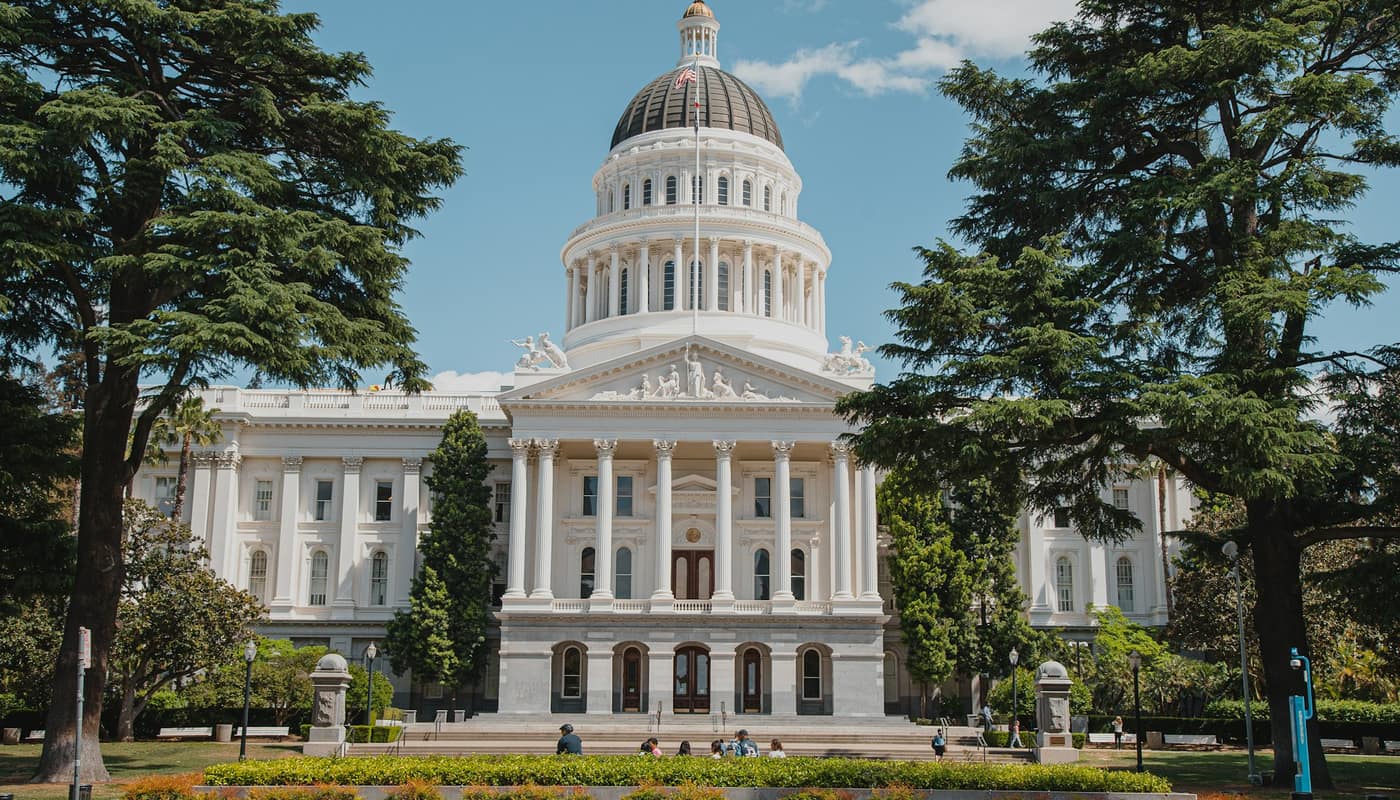
Before California lawmakers vote on a budget of roughly a quarter of a trillion dollars in General Fund spending, they get independent advice from a small office most residents never hear about. This explainer covers what the Legislative Analyst’s Office does, what it publishes and how to read its work.
A small office with a large job
The Legislative Analyst’s Office, usually shortened to LAO, describes itself as “The California Legislature’s Nonpartisan Fiscal and Policy Advisor.” According to its own website, its mission is to provide nonpartisan analysis and advice to the Legislature on fiscal and policy issues. The office says it has served the Legislature for 75 years and is overseen by the Joint Legislative Budget Committee, which it describes as a 16-member bipartisan committee.
The office is small. It reports 43 analysts and about 13 support staff. That is modest next to the executive branch it reviews, which administers programs from Medi-Cal to public universities. The LAO also describes itself as the Legislature’s “eyes and ears” on whether the executive branch carries out legislative policy efficiently and effectively.
Being nonpartisan does not mean having no opinions. The LAO regularly makes recommendations, and some are unwelcome to the governor, to legislators or to interest groups. Nonpartisan, in this context, means it works for the Legislature as a whole rather than for a party or a candidate.
What does the LAO actually produce?
According to the LAO, its work falls into several categories:
| Product | What it does |
|---|---|
| Budget analysis | Reviews the Governor’s annual budget and publishes recommendations |
| Budget control | Reviews administration requests to change the budget after it is enacted |
| Special reports | Covers the state budget and other topics during the year |
| Initiatives and ballot measures | Estimates the fiscal effect of proposed initiatives before circulation and analyzes measures that qualify for the statewide ballot |
| Forecasting | Projects state revenues and expenditures |
Its homepage also lists recurring publications: the Fiscal Outlook, the Overview of the Governor’s Budget, the Overview of the May Revision and the State Spending Plan. As of the most recent items visible there, the office had posted a report on Proposition 98 and K-12 education in the 2026-27 spending plan on October 9, 2026, and a post on health spending on October 19, 2026.
How does the LAO fit into the budget calendar?
The LAO’s reports line up with the stages described in how California’s state budget is built. Each stage has a companion document:
- November: the Fiscal Outlook. The LAO publishes its own estimate of the budget’s condition before the Governor proposes anything. A search of the office’s publications found the November 2025 edition for the 2026-27 budget; the office’s next outlook would be expected around the same time this fall, though it had not appeared when this was written.
- January: the Overview of the Governor’s Budget. Within days of the Governor’s proposal, the LAO publishes an initial assessment.
- May: the Overview of the May Revision. The administration updates its numbers, and the LAO responds.
- Summer and fall: the spending plan. After the budget is enacted, the LAO describes what was actually adopted. Its August 26, 2026 overview of the 2026-27 spending plan is one example.
Why two sets of numbers can both be “right”
The most instructive example in the recent record is the 2026-27 budget. According to the LAO’s January 12, 2026 overview, the Governor presented the proposal on January 9, 2026, and it showed a General Fund deficit of about $3 billion, which the LAO called roughly balanced. The LAO’s own November Fiscal Outlook had estimated a deficit of $18 billion.
Why the gap of about $15 billion? The LAO’s explanation is that the administration’s revenue estimates were much higher than its own. It said the Governor’s estimates did not account for a likely stock market downturn, which the LAO considers a serious risk to income tax revenue. The LAO also said the administration’s revenue estimate was $42 billion above the 2025 Budget Act.
Neither office is claiming certainty. In its November 2025 report on school and community college funding, the LAO said its estimates are the most likely outcomes rather than guarantees, and noted that uncertainty grows over time: the likely range for 2029-30 is nearly twice as wide as for 2026-27. Two estimates built on different assumptions about the stock market can differ widely without either being a mistake.
A worked look at the January 2026 figures
The LAO’s overview of the Governor’s 2026-27 proposal gives these General Fund figures:
| Item | 2025-26 (revised) | 2026-27 (proposed) |
|---|---|---|
| Expenditures | $237.7 billion | $248.3 billion |
| Revenues and transfers | $235.2 billion | $227.4 billion |
Illustrative arithmetic: proposed spending rises by $248.3 billion minus $237.7 billion, or $10.6 billion, while revenues and transfers fall by $235.2 billion minus $227.4 billion, or $7.8 billion. Spending exceeding revenue by about $20.9 billion in 2026-27 is covered by other tools, such as the prior-year balance and the budget solutions the administration proposed, which the LAO put at about $9 billion in total. The LAO also reported total reserves of $18.9 billion under the proposal, made up of $4.5 billion in the Special Fund for Economic Uncertainties and $14.4 billion in the Budget Stabilization Account, the state’s rainy-day fund.
These are proposed figures from early 2026, not the final enacted budget. Readers who want the enacted numbers should consult the LAO’s 2026-27 spending plan series and the state Department of Finance.
What the LAO said about long-term deficits
Beyond the single-year picture, the LAO’s January report projected multiyear operating deficits of $27 billion in 2027-28, $22 billion in 2028-29 and $23 billion in 2029-30. It described estimated deficits of $20 billion to $35 billion per year as chronic and structural, meaning they persist even as the economy and revenues grow.
The LAO made three recommendations to the Legislature, according to its report: adopt the LAO’s revenue outlook as the starting point; address the resulting problem, or, if using the administration’s estimates, keep required rainy-day deposits and set aside $5.6 billion in settle-up funds; and adopt a plan to close at least half of the multiyear deficits, which it said would take at least $10 billion in additional ongoing solutions. The administration, for its part, built its plan on its own revenue forecast. Those are the positions of the two offices, not settled facts, and the Legislature makes the final choices.
Does the LAO decide anything?
No. The LAO has no vote and no power to change a budget or block a bill. It advises. Legislators can accept, modify or ignore its recommendations, and many of its reports are meant to give members and their staff a common set of facts to argue from.
Its influence is therefore informational. Because the office estimates the fiscal effect of proposed initiatives and analyzes qualifying ballot measures, its descriptions also reach voters; the same process is covered in how a California ballot initiative qualifies. And because lawmakers rely on it while writing bills, it is part of the pipeline described in how the California Legislature makes law.
Reading an LAO report like a local resident
For San Diego readers, state decisions reach home through school funding, health programs, transit grants and local government aid. The LAO’s reports are free and organized by policy area, which makes them a practical way to check what is being proposed in Sacramento. A few habits help:
- Check the date. Budget figures are revised several times a year.
- Look for the assumptions. The explanation for a gap between two estimates is usually in the revenue or economic assumptions.
- Separate analysis from recommendation. The LAO describes conditions and also recommends actions; they are different parts of a report.
- Compare with the administration’s documents. The Department of Finance publishes the Governor’s budget; reading both shows where they differ.
What to remember about the referee
The LAO is best understood as a staff-level referee that gives the Legislature a second opinion on the state’s finances. Its estimates carry uncertainty, its recommendations are advice, and the gap between its numbers and the Governor’s is often the most useful part of the story. For current figures, the office’s own website is the place to start.
This article explains how a state institution works; it is general information, not an endorsement of any budget position, and not personalized financial, tax or legal advice.
Sources: Legislative Analyst’s Office