On the floor of Mission Valley, beside the San Diego River and a short walk from a Trolley station, a stadium opened in August 2022 that has become the home field for San Diego State University football and for professional soccer. Snapdragon Stadium replaced an older stadium on the same site, and it reflects a long civic debate about what should be built there. For fans heading to a game, the venue is easy to reach and comfortable to watch from, and a few practical details make the experience smoother.
How did the stadium come about?
For decades, the site of the stadium was occupied by a multipurpose stadium that hosted professional football and baseball, as well as college football. After the NFL team left in 2017 and the older stadium aged, the future of the site became a question for the city. In 2018, San Diego voters approved a ballot measure that allowed San Diego State University to acquire and redevelop the property, including a new stadium, a river park and campus and housing development. The old stadium was demolished and the new one was built.
The stadium opened in 2022 with an SDSU football game. The naming rights are held by the technology company whose brand gives the venue its name. The wider project, called SDSU Mission Valley, includes a river park along the San Diego River and plans for housing, offices and academic space, and it ties into the university’s larger campus nearby. The process illustrates how a ballot measure can shape land use in a large part of the city, a point related to the structure of local government covered in how the city is organized.
Who plays there?
The stadium has several tenants.
- San Diego State Aztecs football. The university’s team plays its home games there, in the Mountain West Conference, and the stadium also hosts other university events.
- San Diego FC. The Major League Soccer club began play in 2025 and uses the stadium as its home field.
- San Diego Wave FC. The National Women’s Soccer League team also plays there.
- Other events. The venue has hosted concerts, high school and college games, international soccer matches and community events.
The stadium’s capacity is about 35,000 for football, with a design that allows expansion, and it is slightly lower for soccer in some configurations. Seating is arranged close to the field, and the stadium has club areas, concessions and a design that aims to keep sightlines clear.
How do you get there by Trolley?
One of the stadium’s best features is its access to transit. The Trolley’s Green Line stops at a station a short walk from the stadium, and it connects with downtown and with the university campus, as covered in riding the Trolley and buses. On game days, trains run more frequently and can fill up, so fans should allow extra time on the way home. Buses also serve the area, and some events offer park-and-ride options from other locations.
The stadium is also near other attractions in Mission Valley. The mission described in Mission San Diego de Alcalá sits a short distance away, and a day trip could combine a historic visit with a game.
What should you know about bags and security?
Stadiums have tightened security in recent years, and Snapdragon Stadium follows a clear-bag policy. Bags generally must be clear plastic or vinyl and within a size limit, or small clutch-style purses may be allowed, and fans may use clear freezer bags. Other bags may be prohibited, and the stadium offers lockers for rent outside the venue. Because policies change, the stadium’s official site and the team’s page should be checked before each event, especially for rules on items such as umbrellas, outside food and cameras.
Fans should plan to go through security screening and arrive early to avoid lines. Mobile ticketing is standard, so a charged phone is important.
What about parking and traffic?
Parking at and near the stadium is limited, and the venue encourages fans to purchase parking in advance or use public transportation. The surrounding area has parking lots and structures with varying prices, and the university campus nearby may offer options that include shuttles or Trolley passes at times. Mission Valley’s roads, including Interstate 8 and State Route 163, can back up before and after games, so leaving early or lingering after the game helps. Rideshare areas are designated, though they can be crowded.
What is the role of the university?
San Diego State University is one of the region’s major public universities, as explained in how the region’s higher education systems fit together. The athletics program is an important part of campus life, with football a centerpiece. The stadium also supports the university’s broader Mission Valley project, which the university describes as an opportunity to grow its campus and add facilities for students and the community. Game days bring alumni, students and neighbors together, and the university’s traditions, such as tailgating, a student section and school colors, are part of the experience.
How is the game-day atmosphere?
College football games typically include tailgating in parking areas, pregame events, a marching band and a student section that cheers throughout the game. Soccer matches have a different character, with supporters’ groups that sing, chant and wave flags. The stadium’s design, with seats close to the field, helps amplify the sound. Families will find a mix of experiences, with some sections quieter and others loud.
Visitors can bring layers, since Mission Valley can be warm in the afternoon and cool after dark, and sunscreen for day games. Water and snacks are available at concession stands, and some stadium rules limit outside food and drinks.
Is the stadium accessible?
The stadium has accessible seating, restrooms, elevators and entrances, and staff can help fans with mobility needs. People who need accommodations can contact the stadium or ticket office in advance. Sensory-friendly resources may be available at some events.
How early should fans arrive?
For football, many fans arrive two to three hours before kickoff to tailgate, find parking and settle into their seats. For soccer, arriving an hour or so early is usually enough, since pregame events and supporter marches add to the atmosphere. Gates typically open ahead of the start time, and the stadium posts the exact opening times for each event. Fans taking the Trolley should factor in the walk from the station and the crowds boarding afterward, and those with young children may want to plan a quieter route or a brief rest before heading home.
What else is worth knowing?
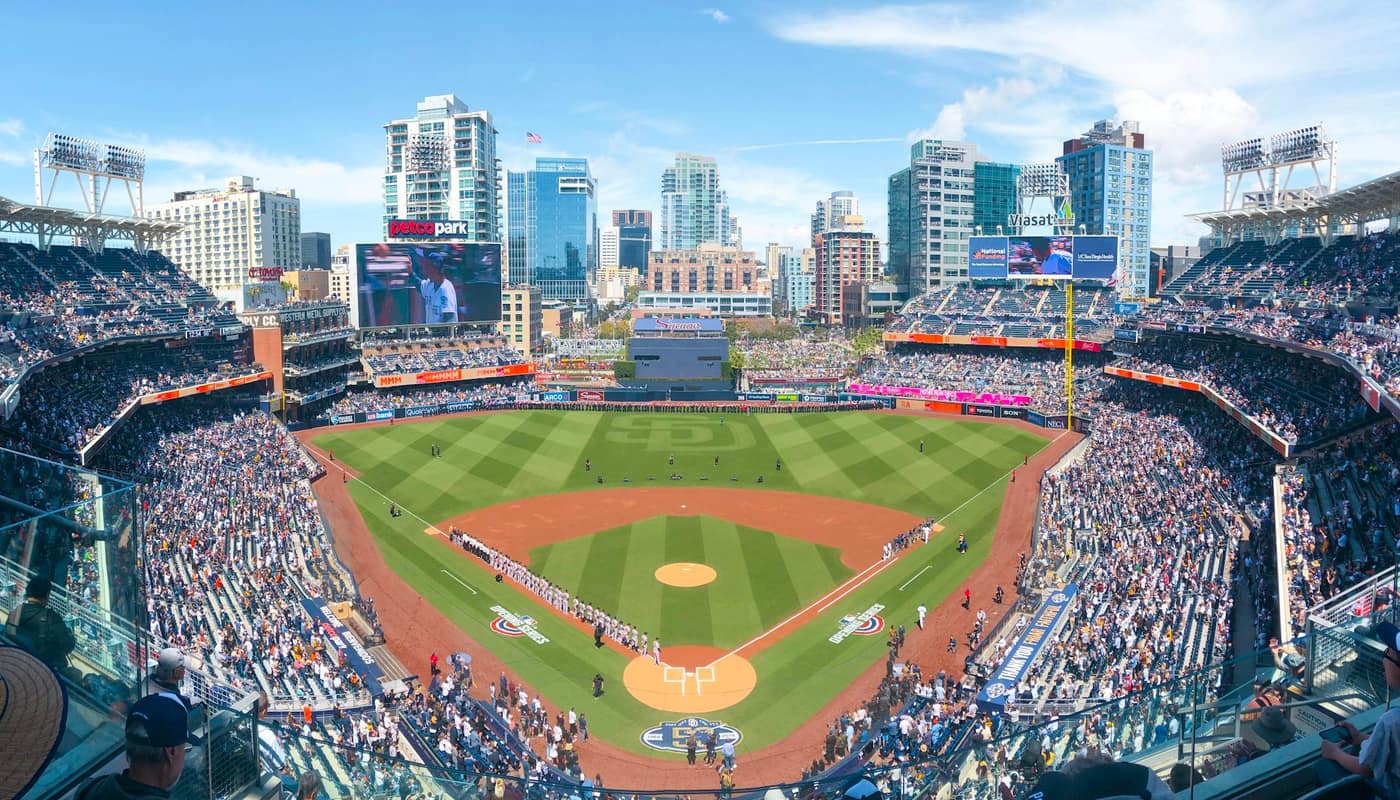
The area around the stadium continues to develop, with a river park, trails and new buildings. Visitors may find construction or changes in access, so checking current maps helps. The stadium also plays a role in the regional sports landscape, which includes the baseball team at the downtown ballpark described in the Petco Park guide, and in the larger conversation about how San Diego uses its land.
For fans, the best approach is simple: arrive by Trolley, bring a clear bag, plan to be early and enjoy a game in a stadium built on one of the most debated pieces of land in the city.
Sources: San Diego State University; Snapdragon Stadium; San Diego Metropolitan Transit System; Major League Soccer; National Women’s Soccer League