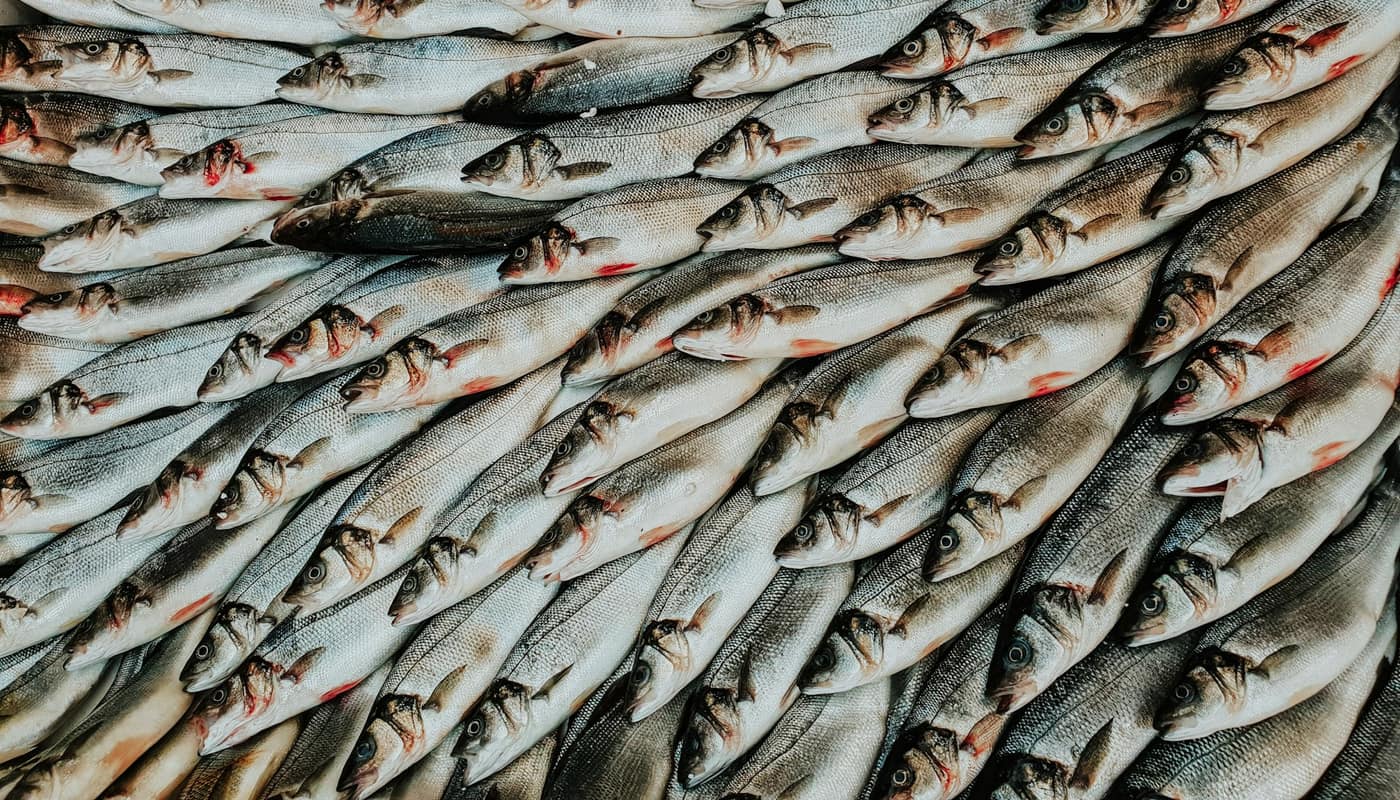
To choose sustainable seafood, start with the source: ask whether it was caught or farmed in a place with enforceable limits, and favor U.S.-caught or U.S.-farmed options when you can. NOAA Fisheries, the federal agency that manages the nation’s marine fisheries, says that is a sustainable choice, and that its FishWatch profiles are the best place to check a species before you buy.
No single list or label settles the question, though. The honest answer is a short set of habits, plus an understanding of what each tool can and cannot tell you.
What does “sustainable seafood” actually mean?
NOAA Fisheries defines sustainable seafood as wild-caught or farmed seafood that is “harvested or produced in ways that protect the long-term health of species populations and ecosystems.” Two ideas sit inside that sentence. One is the health of the fish population itself, meaning that enough fish are left to reproduce. The other is the surrounding ecosystem, which includes the habitat fish depend on and the other animals caught or harmed along the way.
That second idea is why a fish can be abundant and still be a questionable choice. A fishing method that scrapes up seafloor habitat, or that regularly catches protected species by accident, can undermine the ocean even when the target species is plentiful. The accidental catch of unwanted species is called bycatch.
How are U.S. wild fisheries kept in check?
According to NOAA, U.S. wild-capture fisheries are scientifically monitored, regionally managed and legally enforced under 10 national standards of sustainability set through the Magnuson-Stevens Act, the main federal fisheries law. NOAA says fishery management plans must, by law:
- consider social and economic outcomes for fishing communities;
- prevent overfishing;
- rebuild depleted stocks;
- minimize bycatch and interactions with protected species; and
- identify and conserve essential fish habitat.
NOAA reports that more than 90 percent of the stocks it monitors are not subject to overfishing. It also says its standards go beyond international eco-labeling standards. These are the agency’s own statements about its own system, so treat them as the regulator’s account rather than an independent audit. They do explain why NOAA treats domestic origin as a useful shortcut.
Regional councils write the plans in an open public process, using the best available science, and NOAA says harvest and operating requirements are adjusted as ocean conditions change. Our earlier explainer on where San Diego’s seafood comes from covers how that framework applies on the West Coast.
A step-by-step way to choose at the counter
Here is a sequence that works at a grocery fish counter, a market stall or a restaurant.
- Identify the species precisely. “White fish” or “snapper” can cover several different species. Ask for the specific name.
- Ask where it was caught or farmed, and by what method. Wild versus farmed and the country of origin both matter.
- Look it up on FishWatch. NOAA’s Sustainable Seafood Profiles can be filtered by harvest type (farmed or wild-caught), species category and region.
- Prefer U.S.-caught or U.S.-farmed when available. NOAA calls that a sustainable choice.
- Buy from a knowledgeable, reputable dealer. NOAA recommends sellers with known, proper handling practices.
- Vary what you buy. Rotating species is a common-sense way to avoid leaning on a few popular ones. That point is general advice rather than something drawn from a single agency table.
Where do imports fit in?
Most San Diegans will eat imported seafood at some point. NOAA says the United States is a major seafood importer, and that most imports come from China, Thailand, Canada, Indonesia, Vietnam and Ecuador. About half of imported seafood is produced through aquaculture, which is the farming of fish and shellfish. NOAA’s page does not give an overall import share of what Americans eat, and this article does not estimate one.
Imports are not automatically less sustainable. But the traceability is different. NOAA runs the Seafood Import Monitoring Program, which it describes as a risk-based traceability program that requires importers to report data from the point of harvest to entry into U.S. commerce. The program is aimed at keeping illegally caught, unreported or misrepresented seafood out of the market.
Three details are worth knowing:
- It covers 13 species groups: abalone, Atlantic cod, Atlantic blue crab, dolphinfish (mahi-mahi), grouper, red king crab, Pacific cod, red snapper, sea cucumber, sharks, shrimp, swordfish and tunas.
- Those groups include more than 1,100 unique species, and NOAA says the program covers roughly half of U.S. seafood imports.
- It is a reporting requirement for importers, not a consumer label. Nothing on the program page suggests you will see a “monitored” sticker at the store.
Can you trust the label or the menu?
Often the information simply is not on the menu. NOAA notes that seafood fraud, including mislabeling and the laundering of illegally harvested seafood, can occur along the supply chain. That is part of why the questions in the checklist matter: a seller who can name the species, the place and the method is giving you usable information, and a vague answer is information too.
Eco-labels, the logos printed on some packages, are a separate matter. NOAA’s page does not explain how to read them, so this article does not rank any of them. It says only that U.S. wild-capture standards exceed international eco-labeling standards, according to the agency. If a package carries a logo, treat it as one signal and check the species on FishWatch as well.
Is sustainable the same as healthy?
Not exactly, and the two sets of advice can pull in different directions. The U.S. Food and Drug Administration (FDA) and the Environmental Protection Agency publish advice about mercury in fish for people who are or might become pregnant, who are breastfeeding, or who are feeding children ages 1 to 11. It sorts fish into three lists: Best Choices, Good Choices, and Choices to Avoid, the last being the highest in mercury.
| FDA list | Examples named by the FDA |
|---|---|
| Best Choices | Salmon, shrimp, sardine, cod, squid, canned light tuna |
| Good Choices | Halibut, grouper, snapper, rockfish, mahi-mahi, yellowfin tuna |
| Choices to Avoid | Shark, swordfish, king mackerel, marlin, bigeye tuna |
According to the FDA, a serving for pregnant or breastfeeding adults is 4 ounces, with 2 to 3 servings a week from the Best Choices list or 1 serving from the Good Choices list. For children, the agency lists servings of about 1 ounce at ages 1 to 3, 2 ounces at ages 4 to 7, 3 ounces at ages 8 to 10 and 4 ounces at age 11, with 2 servings a week from the Best Choices list.
The overlap with the sustainability question is real but partial. Swordfish, for example, appears on the FDA’s avoid list and among the species groups NOAA’s import program tracks closely. Families with specific health questions should talk with a clinician rather than rely on a general chart. NOAA also notes that the Dietary Guidelines for Americans recommend adults eat at least 8 ounces of seafood per week.
What are the common mistakes?
- Assuming “wild” always beats “farmed.” NOAA says its profiles cover both, and it describes U.S. fish farms as operating under some of the world’s strongest environmental protections. Both methods vary by species and place.
- Treating an “overfished” listing as a permanent ban. The terms differ: overfishing describes the rate of catch, while overfished describes the size of the stock. A stock under a rebuilding plan is a managed one, so check the profile’s detail rather than the headline.
- Expecting FishWatch to cover everything. NOAA says the directory covers the most common federally managed marine species. It may not list species caught mainly in state waters, freshwater species or products not from the United States.
- Forgetting handling at home. NOAA’s guidance is to “keep it cold, keep it moving, and keep it clean.”
- Relying on one tool. A label, an app and a menu note each answer part of the question.
What varies by place, season and person?
Availability changes with the season and the weather, and so does price. Local boats sell a different mix than a national chain does. Direct buying from fishermen can tell you the most, because you can ask the person who caught it, a point explored in our guide to shopping San Diego’s certified farmers’ markets, which covers a parallel direct-from-producer system for produce. The health of nearby waters also matters; the La Jolla Underwater Park and Ecological Reserve is one example of marine protection close to home.
What counts as the “right” choice also depends on your priorities. Some shoppers weigh price and availability most heavily, some weigh mercury guidance, and some weigh the fishing method. The steps above work for all of them.
A short rule set worth keeping
Sustainable seafood is rarely a single product and more often a pattern. Name the species, learn the origin and method, check it on FishWatch, favor U.S. sources where they exist and treat labels as clues rather than proof. Where the answer is unclear, a seller’s willingness to answer is itself a useful signal. For current figures and the latest species profiles, consult NOAA Fisheries directly, since fishery status and rules change from year to year.
This article is general information about seafood sourcing, not medical or dietary advice. Consult a clinician about fish consumption during pregnancy or for children.
Sources: NOAA Fisheries; U.S. Food and Drug Administration