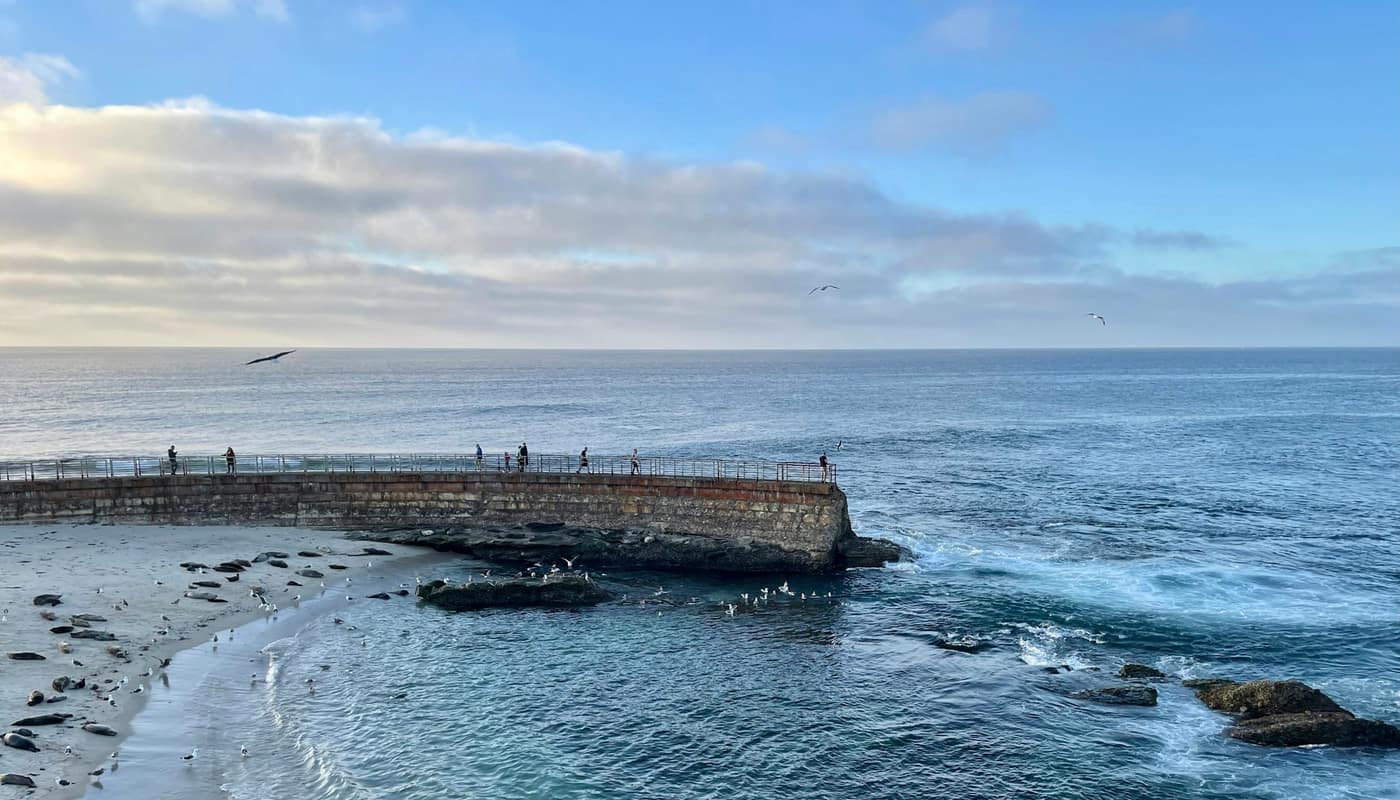
On a clear weekend morning, the cove at La Jolla is crowded with swimmers, snorkelers and kayakers, and the rocks above are lined with sea lions that seem entirely unbothered by the audience. What many visitors do not realize is that the water they are floating in is a protected marine area with its own rules, and that the sea lions are covered by federal law. The reserve has been a feature of San Diego’s coast for more than half a century, and understanding it makes a visit safer for people and better for the animals.
What is the Underwater Park?
The San Diego-La Jolla Underwater Park was created in 1970, when the San Diego City Council dedicated a large area of tide and submerged lands off La Jolla as an underwater park. Within it, a smaller area of roughly 500 acres was set aside as an ecological reserve and marine life refuge, a zone sometimes summed up with the slogan “Look, Don’t Touch.” In 1981, the council extended the ecological reserve’s boundaries to include La Jolla Cove.
The park’s protections have since been layered with state conservation designations. Under California’s marine protected area network, the waters off La Jolla fall within areas that include the San Diego-Scripps Coastal Marine Conservation Area and the Matlahuayl State Marine Reserve. Names and boundaries on maps can therefore differ depending on whether they come from the city, the state or a tour operator, and anyone planning a visit should check the current maps.
What are the rules?
The reserve is a no-take area, which means that removing marine life, shells or other objects is prohibited. Fishing and collecting are not allowed, and the city’s lifeguards publish the basics on their beach pages. State marine protected area rules, enforced by the California Department of Fish and Wildlife, add their own restrictions on what can be taken from different zones, and some zones are stricter than others.
In practice, the guidelines for visitors are straightforward:
- Look but do not collect. Do not pick up shells, starfish, rocks or anything else, and do not feed wildlife.
- Keep your distance from animals. Never touch or chase seals, sea lions or birds.
- Follow posted signs. Beach and water closures, including seasonal ones, are posted at access points.
- Use caution with gear. Spearfishing and fishing equipment are not appropriate in the reserve.
Rules about specific activities, such as surfing, kayak launching or diving at particular locations, change and vary by zone, so the lifeguards, who staff the area, are the best source for what applies on a given day.
Why are there so many seals and sea lions?
The rocks and beaches around La Jolla attract two kinds of marine mammals that people often confuse. Sea lions are larger, have visible ear flaps and can walk on their flippers, and they are the animals most often seen on the rocks at the cove. Harbor seals are smaller, have no ear flaps and move on land by flopping on their bellies, and they are the animals at the Children’s Pool beach a little to the south.
Both are protected under the federal Marine Mammal Protection Act, which makes it illegal to harass, feed or disturb them. The law matters in a practical way. A sea lion that feels cornered can bite, and bites can cause serious infections. City park rangers are responsible for enforcement, and the city has urged visitors to keep a wide berth after incidents in which people got too close.
The Children’s Pool is a special case. The beach is closed to the public during the harbor seals’ pupping season, which runs from mid-December to mid-May, so that mothers and pups are left undisturbed. The closure has been the subject of years of dispute and court cases, and a court has allowed the city to keep it. Anyone planning a trip should confirm the dates, which have been described in news reports and city notices.
How do people snorkel and kayak responsibly?
Snorkeling and kayaking are two of the most popular ways to see the reserve, and both are widely offered by local outfitters. A few general points apply:
- Check conditions first. Surf, swell and visibility change quickly, and the lifeguards post daily conditions. Winter swells can make entry over the rocks dangerous.
- Swim with a buddy. Cold water, currents and crowded conditions all increase risk.
- Wear a wetsuit when the water is cold. Even in summer, the Pacific off San Diego is cooler than many visitors expect.
- Keep clear of wildlife and kelp. Avoid approaching sea lions in the water, because they can be curious or defensive.
- Use a guided trip if in doubt. Operators know current conditions and the rules for launching kayaks and landing at beaches.
The area is also popular with scuba divers, who may find kelp beds, rocky reefs and a variety of fish. Divers should be certified, should plan dives with local conditions in mind, and should know the rules for the zone they enter.
What else should visitors know?
The shoreline above the water is just as important to treat with care. The sandstone bluffs around La Jolla are unstable, and the city has warned visitors against standing close to the edge or sitting beneath cliffs. Tide pools are alive with small creatures, and stepping on them or removing animals harms the habitat. Trash and sunscreen residue can reach the water, so packing out everything and using reef-friendly products are small steps that add up.
Parking in La Jolla is limited, especially on weekends and holidays. Many visitors find it easier to arrive early, use public transportation or walk from nearby neighborhoods. The Trolley and bus network, covered in riding the Trolley and buses, reaches parts of the area, though a short transfer or walk is usually needed. A visit to the cove often pairs naturally with a walk through nearby parks and the village’s shops and restaurants.
What should families with children keep in mind?
The cove looks calm on many days, but conditions can change within an hour. Children should stay with an adult, and anyone unsure of their swimming ability should stay out of the water or wear a flotation device. Tide pools and rock ledges are slippery, and waves can surge unexpectedly onto lower rocks. Explaining the “look, don’t touch” idea ahead of time helps: a child who learns that sea lions and tide pool animals are wild, not pets, is less likely to approach them. Lifeguards are posted at the main beaches and are glad to answer questions about conditions and wildlife. Seasonal wildlife viewing farther offshore is covered in the whale watching guide.
Why protect the water at all?
Marine protected areas are meant to let ecosystems recover and to provide a baseline against which scientists can compare unprotected waters. The La Jolla reserve sits next to the Scripps Institution of Oceanography, one of the world’s major marine research institutions, and the area has long been used for research and education. The same coast supports a big part of the region’s tourism economy, discussed in the region’s economy, which depends on keeping the shoreline attractive.
For visitors, the lesson is simple. The reserve rewards patience and distance, and the animals and plants that make it special are better left exactly where they are.
Sources: City of San Diego Lifeguard Services; California Department of Fish and Wildlife; National Oceanic and Atmospheric Administration; City of San Diego Park and Recreation Department