To hike Torrey Pines safely, stay on the marked trails, keep away from the base of the sandstone cliffs, give any rattlesnake room to leave, and plan beach walks around low tide. First check that the reserve is open, because as of November 24, 2026 California State Parks lists it as closed for construction.
Is Torrey Pines open right now?
Not for hiking. According to California State Parks, Torrey Pines State Natural Reserve has been closed to all visitors, including pedestrians, bicyclists and vehicles, since September 22, 2026. The agency’s trail-closure page says the park road, upper parking lots and all trails are closed through February 2027, with full access expected by March 1, 2027. The state’s reserve page also lists the visitor center as closed until March.
The same reserve page still carries a “Trail Conditions” line saying all trails are open. That line conflicts with the closure notice, so treat the closure notice as the one that counts and call the park office at (858) 755-2063 to confirm. The closure, the pass rules and the beach lots that stay open are covered in a separate piece on the Torrey Pines reserve closure. The rest of this guide is meant for the reopening and for planning ahead.
What makes this hike different from a typical city park walk?
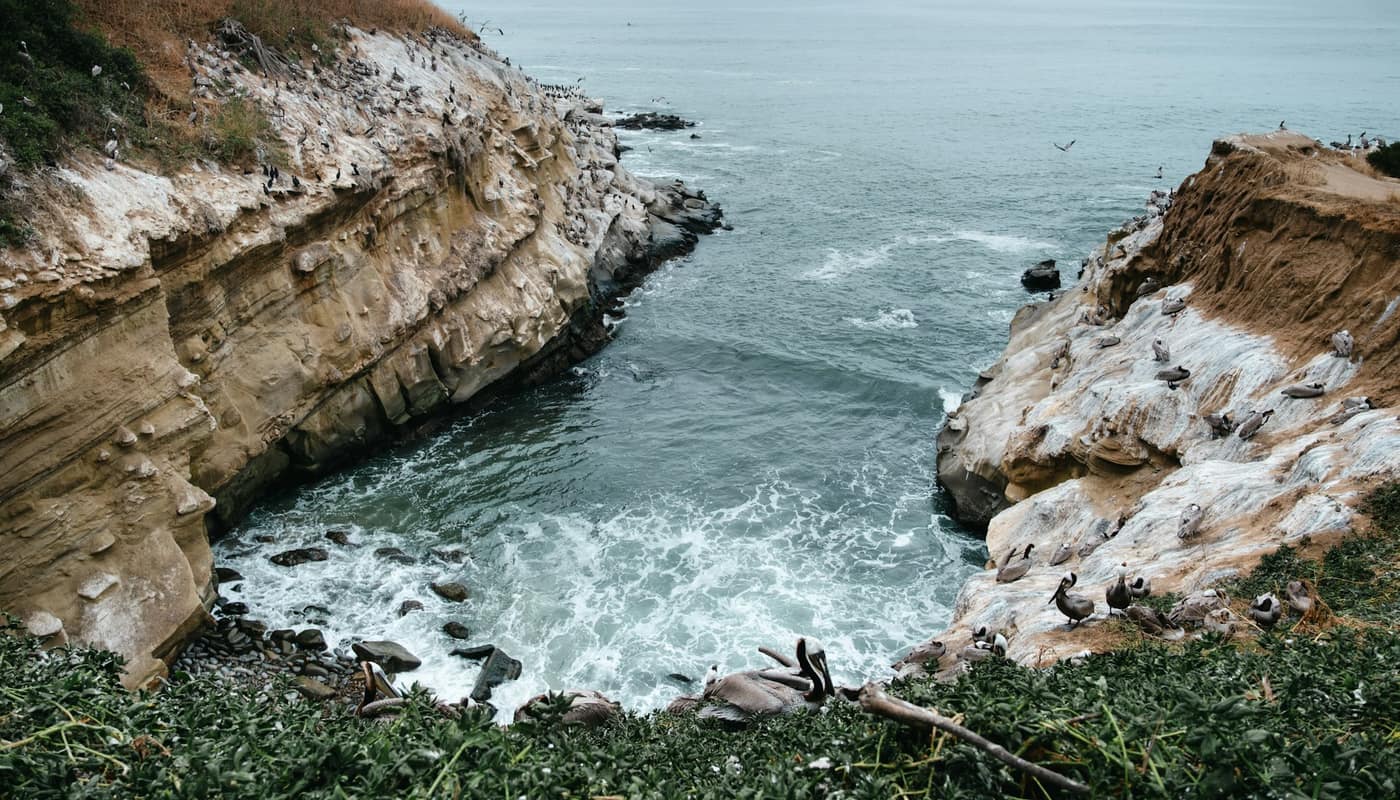
The reserve sits on headlands above the ocean, with high, broken cliffs and deep ravines. Two features drive nearly every safety rule: soft sandstone that erodes, and a coastline that mixes narrow trails, stairs and a beach reached by descent.
California State Parks says most trails are under a mile long. That makes the reserve approachable, but short does not mean risk-free. The steps, the drop-offs and the weather matter as much as the distance.
How long are the trails, and which one fits you?
Lengths below come from the state’s trail pages. They are the agency’s figures, and trail availability can change.
| Trail | Length and character, per State Parks |
|---|---|
| Guy Fleming | Relatively level, easy loop of about two-thirds of a mile |
| Parry Grove | Half-mile loop with more than 100 stone steps |
| High Point | A steep 100 yards with steps |
| Razor Point | About two-thirds of a mile to the overlook |
| Beach Trail | Three-quarters of a mile, descending roughly 300 feet to the beach, with the final access by stairs |
| Broken Hill | About 1.3 miles via the South Fork or 1.4 miles via the North Fork to the beach |
| Extension trails | Mar Scenic (half a mile), DAR (half a mile), Margaret Fleming Nature (three-quarters of a mile), Red Ridge Loop (one-third of a mile) |
The state also describes the Discovery Trail as accessible and says a beach wheelchair is available at the South Beach entrance kiosk. Anyone with mobility limits, young children or a bad knee should note the step counts: Parry Grove’s stone steps can be slippery and dangerous, according to the agency.
A worked example for the beach loop
Illustrative arithmetic: walking down the Beach Trail (three-quarters of a mile) and back up the same way is 0.75 × 2 = 1.5 miles. Because the trail drops about 300 feet, the return is a climb of that amount. A person who plans for a “short” 1.5-mile outing should therefore think of the second half as the harder half.
Why should you stay away from the base of the cliffs?
This is the rule State Parks states most plainly: “Stay away from the bottom of the cliffs.” The agency says rockslides and cliff collapses occur without notice. Nothing about a calm day or a clear sky changes that, which is why a sunny afternoon on the sand is not a guarantee of safety.
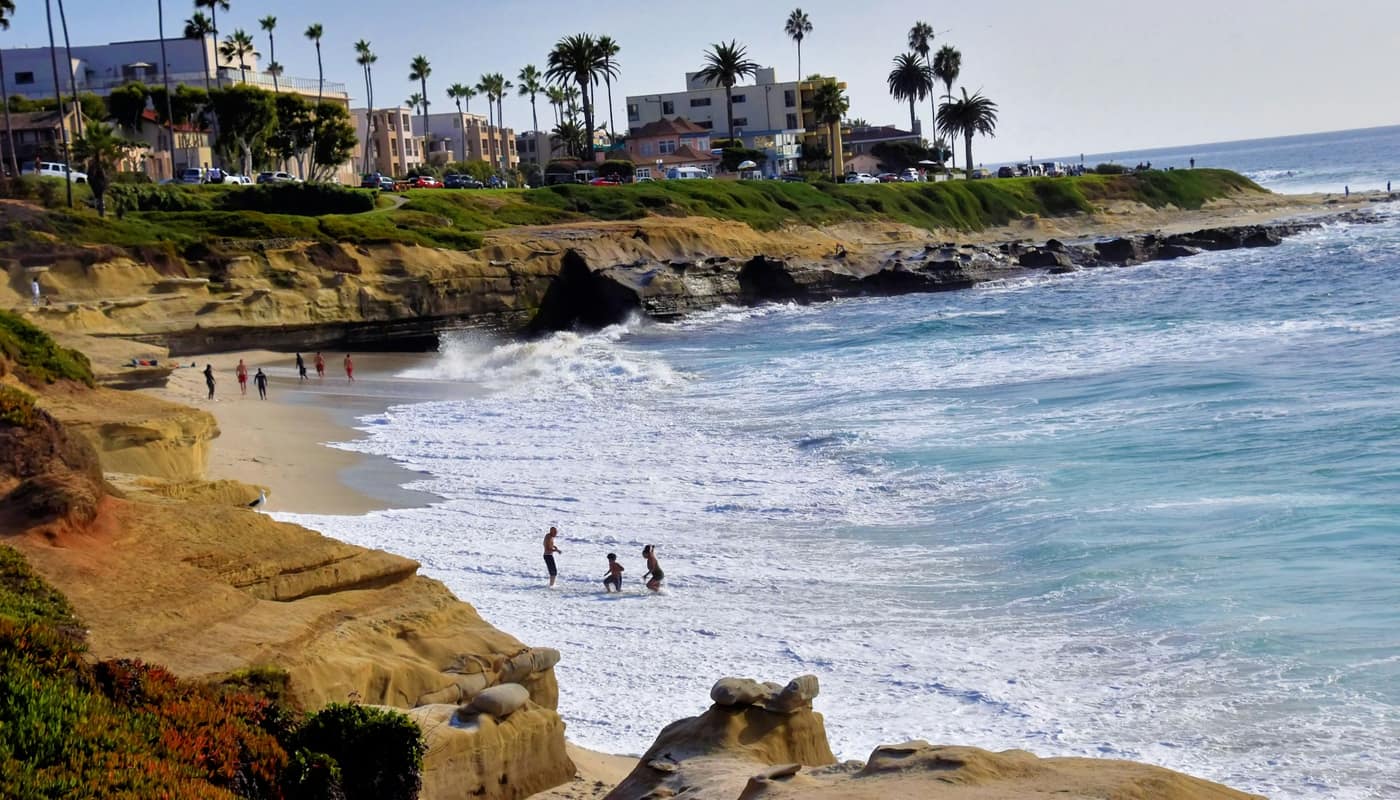
The park’s practical advice is to visit the beach at low tide, when more sand is exposed. According to the agency, that helps walkers keep a minimum distance of 10 feet from the bluffs. At higher tides the sand narrows and the gap between waves and cliff shrinks, which pushes people toward the bluff face. Checking a tide table before you descend is a habit worth building. For general beach hazards beyond this reserve, see the guide to how San Diego beaches, surf zones and lifeguards work.
Are there rattlesnakes at Torrey Pines, and what should you do?
Yes. State Parks says rattlesnakes live in the reserve, and that the Southern Pacific rattlesnake is the one a hiker is most likely to meet, with the red diamond rattlesnake also present. The agency’s instructions are straightforward: if you see one while hiking, stop and wait for it to leave. If it does not, turn around and tell a park employee or volunteer. If a snake appears on the beach, notify a park employee, and do not try to relocate or pick it up.
Staying on marked trails helps here, because it keeps you on ground that is open and visible. Watch where you step and where you put your hands, especially on stairs and rock edges. This guide does not offer medical guidance on snakebite. For that, rely on a clinician or emergency services.
Why does staying on the trail matter so much?
“Stay on trail” is a listed rule, according to State Parks, and the reason is partly ecological. Walking off trail causes erosion, damages plants and disturbs wildlife. The reserve exists to protect the Torrey pine, which the agency calls the nation’s rarest pine tree, so shortcuts and photo detours do real damage to a fragile place.
It is also a safety rule. Cliff edges, loose soil and hidden drop-offs are exactly what a social trail, an unofficial path worn by repeated use, tends to run beside. The agency also says steeper trails, including Broken Hill, Razor Point and the Beach Trail, are usually closed after rain to prevent soil erosion, and the length of the closure depends on how much rain falls and for how long. Treat a posted closure as a firm limit rather than a suggestion.
What are the common mistakes and misconceptions?
- Confusing the reserve with the beach. The reserve and Torrey Pines State Beach are separate units with different access. During the current closure, the state says the beach and its lots stay open while the reserve does not.
- Assuming a state pass opens the gate during a closure. The agency says passes remain valid across the park system but cannot be used at the reserve while it is closed.
- Bringing the dog. Dogs are not allowed in the reserve, according to the state’s reserve page.
- Planning a picnic. Picnicking and camping are prohibited in the reserve, the state says.
- Treating the cliff as scenery. Rockslides give no warning, so the “10 feet” idea is a minimum the agency cites, not a comfort zone.
- Skipping the tide table. Beach walks that start at low tide can turn narrow by the time you return.
- Thinking short means easy. The park’s own numbers show stair-heavy trails such as Parry Grove, and a 300-foot descent on the Beach Trail.
What varies by season, group and day?
Gates open at 7:15 a.m. and close at sunset, according to the state’s reserve page, so winter afternoons leave less margin for a slow return. Trail conditions change after rain, and the agency says some trails close for erosion control. Drinking water is available, the state says, but the page does not specify where, so confirm at the visitor area when it reopens.
Group size matters too. The reserve page says organized groups need a special event permit, and hiking groups must also book a docent-guided hike. Separately, the state’s trail page describes guided nature walks and Sunday mindful walks at set times when the reserve is operating. Schedules, fees and reservation windows change, so use the agency’s current page rather than any date printed here.
Visitors who want a coastal outing before the reserve reopens have options. Cabrillo National Monument offers tide pools and ocean views, and the Torrey Pines golf course guide explains why the golf course, a separate operation, is not part of the state reserve.
A short checklist for the reopening
- Confirm the reserve’s status with California State Parks and by phone.
- Check the tide table if the beach is part of your plan, and aim for low tide.
- Choose a trail whose length and step count match your group.
- Stay on marked trails and stay away from the base of the cliffs.
- If you meet a rattlesnake, stop, wait, and turn back if it does not leave.
- Leave the dog at home and plan to be out before the gates close at sunset.
This article is general information based on California State Parks pages as of November 24, 2026, not medical or safety advice for any individual. Closures, rules, hours and fees can change, so confirm with the agency before you go.
Sources: California State Parks