Few American cities are as closely tied to the armed forces as San Diego. Warships tie up along the bayfront, jets from naval air stations cross the sky above Coronado, and Marine recruits train a short drive from the airport. The military is part of the region’s physical landscape, its economy and its social fabric, and anyone trying to understand San Diego has to account for it.
Why is the military so concentrated here?
The connection dates back to the early twentieth century. San Diego Bay is one of the best natural deep-water harbors on the West Coast, and its mild climate allows year-round training. The Navy established facilities along the bay in the decades before and after World War I, and the region became a major base during World War II, when shipyards, training centers and aircraft factories expanded rapidly. The pattern held through the Cold War and into the present.
The result is that San Diego is a home port for a large share of the Navy’s Pacific forces, and the surrounding area hosts both Navy and Marine Corps installations. The Navy command responsible for most of the region’s shore installations is Navy Region Southwest, which provides base operating support for many facilities across the Southwest.
What are the main installations?
The military’s footprint is spread across the county, with clusters in several areas.
- Naval Base San Diego, on the bay’s southeastern waterfront near downtown, is a major surface ship homeport, with piers, maintenance facilities and support services.
- Naval Base Point Loma, on the peninsula, includes submarine support and communications and research facilities, and it adjoins the Cabrillo National Monument, which is covered in the guide to visiting Cabrillo.
- Naval Air Station North Island and Naval Base Coronado, on the Coronado peninsula, host aircraft carriers, naval aviation units and training programs, along with the Navy’s special warfare training.
- Marine Corps Recruit Depot San Diego, next to the airport, is where Marines who enlist from states in the western United States undergo recruit training, with a large number of new Marines graduating each year.
- Marine Corps Air Station Miramar, in the northern part of the city, is a major aviation base for Marine units.
- Marine Corps Base Camp Pendleton, in the north county near Oceanside, is a large training base with beaches, ranges and open land.
- Naval Medical Center San Diego, in Balboa Park’s neighborhood, is a major military hospital.
- Research and command facilities, including the Navy’s information warfare systems command, which has been central to the region’s defense technology sector.
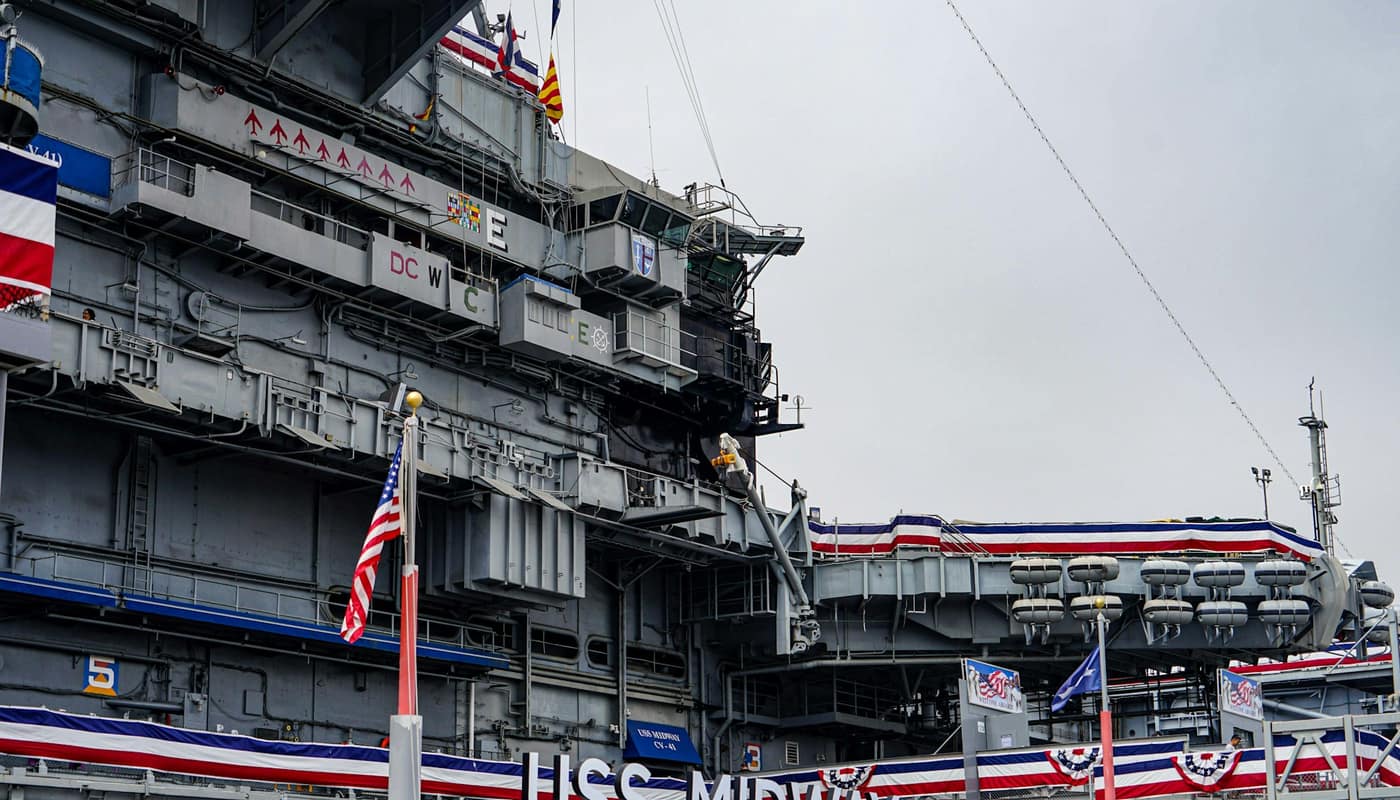
Several installations are open to the public in limited ways, such as ship tours or museum exhibits, though access to bases is generally restricted to personnel, families and visitors with permission.
How many people serve in San Diego?
Counts change from year to year and by who is counting. A recent annual report on the military’s regional economic impact, produced for a local military advisory council, described tens of thousands of active-duty Navy personnel and tens of thousands of active-duty Marines in the greater San Diego area, along with reservists, civilian employees of the Defense Department and a large number of defense contractors. Those totals have moved up and down with ship deployments and basing decisions. Active-duty Navy numbers in the region rose in one recent year, while Marine numbers declined, illustrating how reassignments affect local totals.
Recruit training is a major part of the picture. The depot trains many thousands of new Marines every year, and families travel to San Diego for graduations. The region is also home to a large population of military retirees, who add to local spending and to demand for veterans’ services.
How does the military affect the local economy?
The Defense Department is the region’s largest single economic influence, though the size depends on method. Estimates published by local groups put the military’s contribution, including ripple effects, at roughly a fifth or more of the region’s economic output and at hundreds of thousands of jobs counting direct, indirect and induced employment, as discussed in the regional economy guide. Shipyards and repair firms rely on Navy contracts, and technology firms in the region develop systems for defense customers.
The effects are not purely economic. A large and mobile military population changes the demand for housing near bases, brings people from across the country and shapes local civic life. Military pay and housing allowances affect rental markets, a connection to the topics in tenant protections, and base operations create noise and traffic that nearby neighborhoods live with.
How do bases and the community interact?
Several areas of contact matter day to day.
- Land use. The military owns large tracts of land, and some development near bases is limited to protect flight paths and training. The region’s airport and the military both operate in a crowded airspace, and local land-use bodies consider the military’s interests when reviewing nearby projects.
- The waterfront. The Navy is a major user of San Diego Bay, and its needs for berths, channels and security zones must be balanced with commercial shipping, recreation and the Port of San Diego’s plans, as discussed in what the Port manages.
- Environmental cleanup. Decades of military activity left contamination on some sites, and federal and state agencies oversee cleanup and monitoring.
- Housing. Many service members live off base, competing in the same housing market as civilians, and the Defense Department has increasingly used privatized housing on and near bases.
- Veterans. After service, many veterans stay in the region, and the county has a large veteran population that uses federal and local benefit programs.
How do military families and veterans fit into the community?
Military families are a visible part of San Diego life. Children of service members attend local schools, spouses look for work in a market where frequent moves can interrupt careers, and many families rely on base services such as commissaries, health clinics and child care. Local nonprofits, faith groups and the county’s veterans services office help with housing, employment and health care, and veterans’ groups are an active part of civic life. Transitions out of service are a particular focus, because San Diego’s cost of living can make it hard for a departing sailor or Marine to stay, even though many want to.
What could change?
Defense spending depends on decisions made in Washington, including budgets, force structure and the geographic distribution of ships and units. A decision to move a ship or unit to another port can change local employment and spending. The Navy has also been reviewing its shipyard capacity and maintenance needs, and the region’s repair yards are part of that planning. Local officials and business groups pay close attention to such decisions, and many advocate for investments that keep bases and contractors in the region.
Why it matters
The military is woven into San Diego’s identity. A school field trip may include a visit to a museum ship, a neighbor may be a sailor on deployment, and a conversation about housing may turn on whether a unit is moving to a new base. Understanding the scale and structure of that presence is a useful starting point for understanding why the region looks and works the way it does.
Sources: U.S. Navy Region Southwest; U.S. Marine Corps; San Diego Military Advisory Council; U.S. Department of Defense