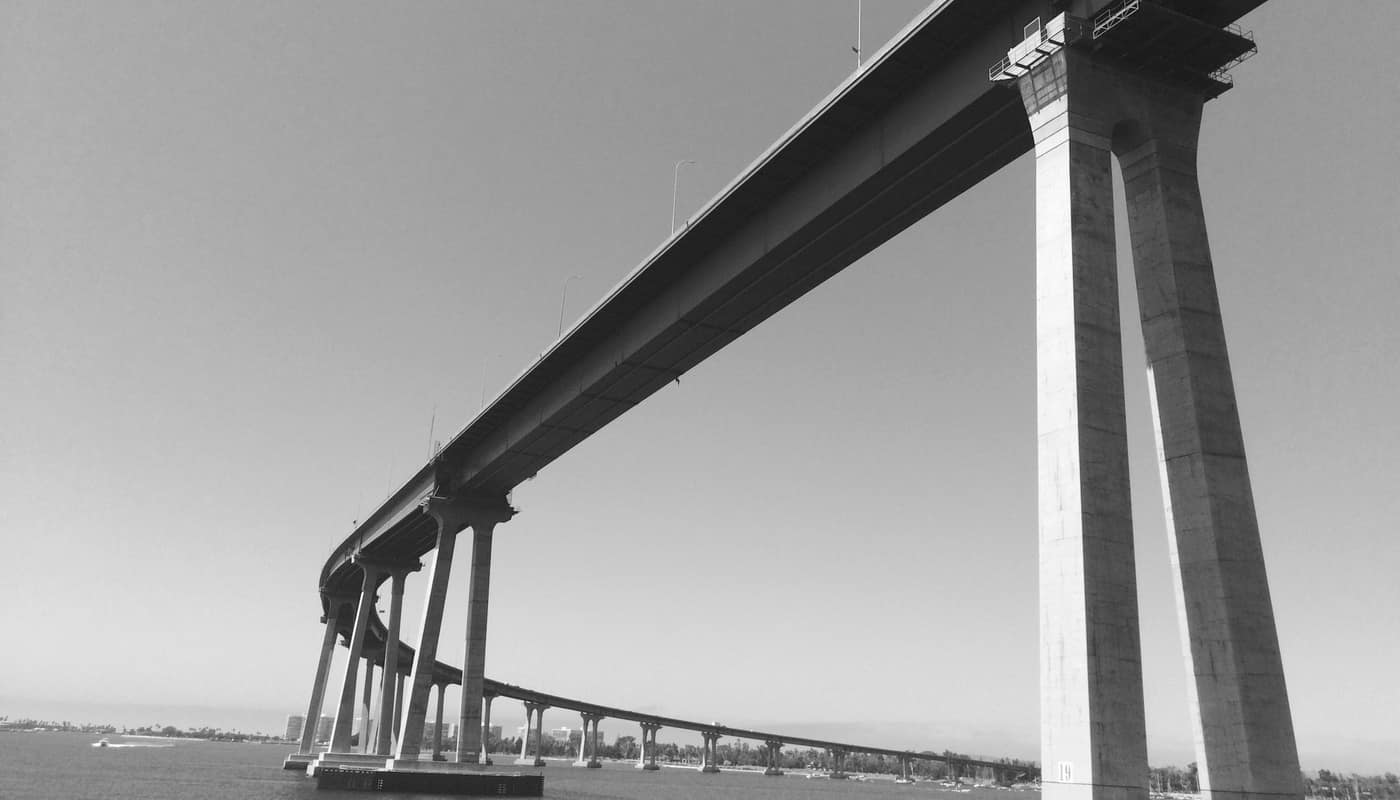
Coronado is reached two ways: by a passenger ferry that crosses San Diego Bay from downtown, or by the San Diego-Coronado Bridge, which carries traffic over the bay. The ferry is the slower, scenic option for people on foot; the bridge is the route for vehicles.
The Port of San Diego describes the choice in just those terms, saying you can cross the bay “whether by bridge or ferry.” What follows explains how each works, how they came to coexist, and which details change often enough that you should confirm them before you travel.
How does the Coronado ferry work?
The ferry links downtown San Diego with the Coronado Ferry Landing. According to the City of San Diego, which describes the service on a page for city employees, the ferry runs between the Ferry Landing and downtown, with stops at Broadway Pier and the Convention Center. The City says it operates daily.
The Port of San Diego, which manages the waterfront park at the Coronado end, tells visitors to “catch the ferry from Downtown San Diego and cross San Diego Bay” to the park. It lists “easy ferry access from Downtown San Diego” among the park’s features.
In practical terms, the trip is a short hop across the bay. You board at a downtown landing, ride across, and step off at the Ferry Landing, where the park, beach, restrooms and shops are close by.
Neither the City nor the Port publishes a timetable or fare table for the ferry on the pages reviewed for this article. The City page lists a phone number for questions and points to the operator. That matters: departure times, ticket prices and any bicycle policy are set by the operator and can change, so treat the operator’s own page as the authority.
Where do you board, and where do you land?
| Point | What the public agencies say |
|---|---|
| Downtown stops | Broadway Pier and the Convention Center, according to the City of San Diego |
| Coronado landing | Coronado Ferry Landing, at 1201 1st Street, according to the Port of San Diego |
| Park hours | 6 a.m. to 10:30 p.m. at Ferry Landing Park, according to the Port |
| Parking at the Coronado end | Both free and paid parking are listed, according to the Port |
Two cautions follow from this. First, the Port’s park hours describe the park, not the boat; the last ferry of the evening is a separate question for the operator. Second, a parking listing at the landing does not mean parking is easy at busy times, so allow extra time on weekends and event days.
What is the commuter ticket, and who can use it?
The City of San Diego page includes a detail that surprises many readers: it says morning commuters can receive a complimentary fare on weekdays. Under the program as described, a commuter picks up a commuter ticket from the morning ferry crew and uses it for the afternoon return.
That description appears on a page written for City employees, and the City also mentions a ferry subsidy program for employees who commute outside the free hours, with details in union agreements or a benefits summary. It is not a general promotion for visitors. Readers who are not City staff should not assume the free ride applies to them, and anyone who is should check the page and the operator for current terms.
How did the bridge and the ferry come to coexist?
Ferries came first. According to the City of San Diego’s digital archives, Elisha S. Babcock Jr., Hampton L. Story and Jacob Gruendike bought the Coronado peninsula in 1885. In April 1886 Babcock and Story formed the San Diego and Coronado Ferry Company to meet growing travel between the city and the peninsula, and the ferry completed its first run that August.
The bridge arrived much later. The City’s archives say construction began in February 1967 at a cost of $50 million, and that the bridge opened on August 3, 1969, during San Diego’s 200th anniversary celebration. Times of San Diego, writing in May 2026, notes that before the bridge opened in 1969 the main way to reach the island was the ferry across the bay.
A rough timeline, using only those dated sources:
- 1885: The Coronado peninsula is bought and a resort community begins.
- April 1886: The ferry company is formed.
- August 1886: The ferry completes its first run.
- February 1967: Bridge construction begins.
- August 3, 1969: The bridge opens.
The sources reviewed do not set out the full history of ferry service between the bridge’s opening and the passenger ferry visitors use today, and this article does not try to fill that gap. If the history matters to you, the City’s digital archives are the place to start.
What should you know about the San Diego-Coronado Bridge itself?
According to the City’s archives, the bridge is 2.12 miles long and has about 200 feet of vertical clearance, so the tallest ships can pass beneath it. The architect was Robert Mosher, and in 1970 the American Institute of Steel Construction gave the bridge a “Most Beautiful Bridge” Award of Merit.
That clearance is not a trivia detail. San Diego Bay is a working harbor, and the high span is what lets large vessels reach berths on the bay’s inner side. Readers curious about the harbor’s other users can read how the Port of San Diego manages the waterfront.
For drivers, the practical points are the ordinary ones: the span is long, traffic is heavy at commute hours, and conditions can change without notice. The pages reviewed here do not state whether any toll applies today, so check current information from the state transportation agency or the City of Coronado before assuming anything about cost.
Is the ferry or the bridge the better choice?
It depends on what you are carrying and where you want to end up. The comparison below is a general framing, not a ranking.
- On foot, sightseeing, no car: The ferry lands at the Ferry Landing, a waterfront park with a beach and nearby shops, according to the Port. It is a natural fit for a day visit.
- Driving, or heading to the island’s interior: The bridge is the vehicle route. The ferry is described by the City and Port as a downtown-to-Ferry-Landing service; neither describes it as carrying cars.
- Cycling: The Port lists bike paths near the Ferry Landing park. Whether bicycles are accepted aboard the ferry is an operator rule that the public pages reviewed do not state, so ask before you board.
- Commuting: The City’s description of a weekday morning commuter fare suggests the ferry is used for daily commutes, but terms are the operator’s and the City’s to set.
What happens once you get to the island?
The ferry drops passengers at one end of a fairly compact stretch of Coronado, and local transit can extend the trip. San Diego’s transit agency, MTS, runs Route 904 in Coronado. MTS says riders arriving by ferry can catch it at 1st Street and B Avenue, and it can also be picked up on Orange Avenue at 2nd Street. The route serves the Ferry Landing, Orange Avenue and the Hotel del Coronado.
Fares matter here. In summer 2025, MTS said Route 904 was free from July 1 through Labor Day, September 1, with service every 15 minutes plus extra late-night and weekend trips; MTS said the City of Coronado and Discover Coronado covered the cost. That notice was specific to that season, and it does not state a fare for the rest of the year. Standard MTS fares listed on the agency’s site include $3.00 for an adult one-way ticket and $7.00 for an adult day pass, with $1.50 and $3.50 for reduced-fare riders who show ID, though MTS cautions that fares may not apply to every route. Confirm the current fare and schedule on the MTS page before you ride.
For a broader look at using the region’s buses and trains together, see riding the San Diego trolley and buses.
Common mistakes when planning a Coronado trip
- Assuming the ferry carries cars. The agencies describe a downtown-to-Ferry-Landing service. Plan to drive via the bridge or leave the car behind.
- Treating the commuter fare as a visitor discount. The City describes it for weekday morning commuters, tied to a return ticket.
- Reusing last summer’s bus fare. The free Route 904 summer service MTS announced covered a specific period in 2025.
- Relying on park hours for the last boat. The Port’s 6 a.m. to 10:30 p.m. hours apply to the park.
- Skipping the operator’s page. Schedules, fares and bike rules are the operator’s to set.
If your plans extend beyond Coronado, the Cabrillo National Monument guide covers the nearby Point Loma peninsula across the bay.
What to confirm before you go
The shape of the choice is stable: a passenger ferry between downtown stops and the Coronado Ferry Landing, and a bridge for vehicles. The details that decide your day are not. Before leaving, look up the current ferry timetable and fare with the operator, the latest Route 904 schedule on the MTS site, and current bridge conditions from the state transportation agency or the City of Coronado.
This article is general information about getting around San Diego and is not a substitute for current schedules, fares or traffic advisories from the operators and agencies named.
Sources: City of San Diego; Port of San Diego; San Diego Metropolitan Transit System; Times of San Diego